
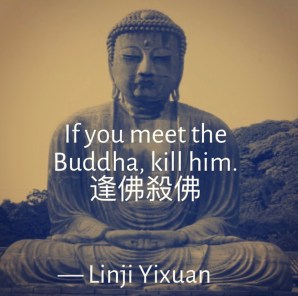
“If you meet the Buddha, kill him.”
I first heard this saying years ago when, as I wandered around on this fairly new invention called “The Internet,” I stumbled upon a website called “Killing the Buddha.”
As the story goes, a monk deep in meditation experiences what he thinks is enlightenment – the awakening, the Buddha-mind – and reports this to his master.
The master explains to the monk that this is nothing special at all, and can even hinder his real progress. The master then instructs: “If you see the Buddha, kill him.”
While various interpretations of this Zen kōan have been offered over the years, I’ve found value in understanding “the Buddha” we encounter to represent our desire for enlightenment rather than enlightenment itself. Humans long to be right, and we generally hate being wrong. That longing can lead us to convince ourselves we know more than we actually do. It’s a typical human habit to assume or just make something up to fill in the gaps in our knowledge.
 Dead-Logic