YouTube Videos Worth Watching

This is an unlisted playlist of videos from around YouTube that I think are thought-provoking and worth taking the time to watch. Topics range from politics to music to personal wellness and more. I add to this list periodically…

Videos Worth Watching on YouTube

I also have an unlisted playlist of videos from around YouTube about professional wrestling that I think are thought-provoking and worth watching. One of my favorite sayings is, “Everything is pro wrestling.” The more you understand how professional wrestling works, the better you’ll understand how things like politics, social media, marketing, etc. work…

Pro Wrestling Videos on YouTube

Killing the Buddha

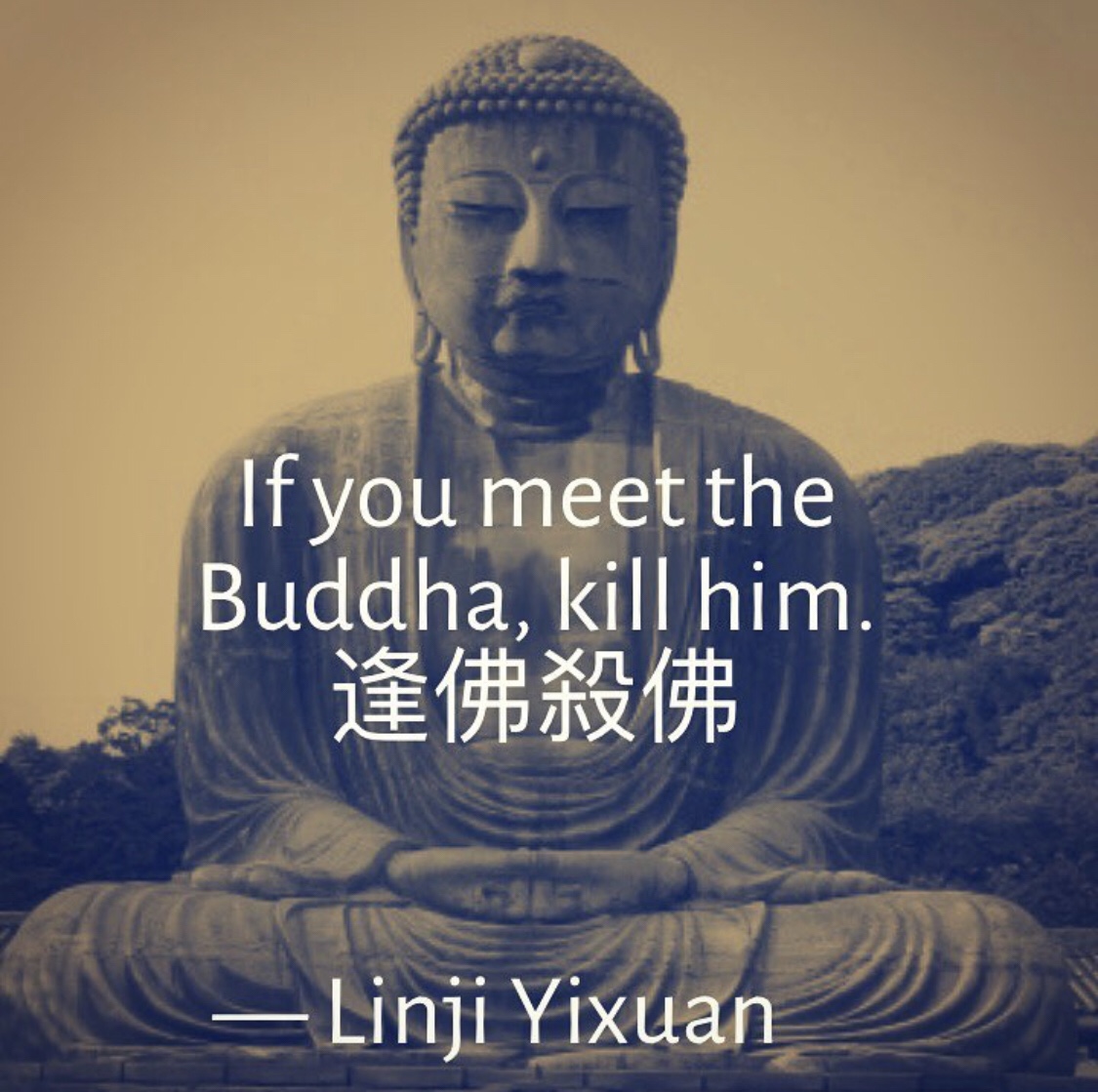
If you meet the Buddha, kill him.”

I first heard this saying years ago when, as I wandered around on this fairly new invention called “The Internet,” I stumbled upon a website called “Killing the Buddha.”
As the story goes, a monk deep in meditation experiences what he thinks is enlightenment – the awakening, the Buddha-mind – and reports this to his master.

The master explains to the monk that this is nothing special at all, and can even hinder his real progress. The master then instructs: “If you see the Buddha, kill him.”

While various interpretations of this Zen kōan have been offered over the years, I’ve found value in understanding “the Buddha” we encounter to represent our desire for enlightenment rather than enlightenment itself. Humans long to be right, and we generally hate being wrong. That longing can lead us to convince ourselves we know more than we actually do. It’s a typical human habit to assume or just make something up to fill in the gaps in our knowledge.

Continue reading “Killing the Buddha”

Who Am I?

“Who am I?” stands as one of the iconic questions of philosophy, alongside “What is the meaning of life?” and “Is there a God?”

Philosophers throughout history have addressed this question. Rene Descartes suggested that our mind and thoughts are our true identity. John Locke’s criterion for personal identity was self-consciousness, which is the ability to reflect upon yourself. For Locke, possessing memories is what makes you certain of who you are. David Hume dismissed notions of having a “self,” arguing that what we think of as “the self” is nothing more than a bundle of perceptions. We take these perceptions and recombine them into meaning and substance based on our previous experience.

Continue reading “Who Am I?”

Self-Titled Track

Self-Titled Track by GhostofSocrates

This video is partially blocked on YouTube because of some Hulk Hogan footage I used near the end. My apologies to Pakistan, Nepal, Sri Lanka, India, Maldives, Bangladesh, Russia, Bhutan, and Afghanistan for not being able to watch it on YouTube. You can watch it here instead.

And while I’m here, I’d like to explain more about what the GhostofSocrates brand is about. It’s a reference to the spirit (the attitude and vision) of the Socratic Method. Questions are good. They help us seek knowledge and truth. Questions help us learn something new. For the past year, I’ve been slowly learning more about music theory. I posted my first beat on YouTube eight months ago. Six months ago I started learning the guitar.

I’m not doing any of this for money. I’m doing it for fun and for the love of music and passion for creativity. It means a lot to me, even when I’m dressed like a lobster and jump kicking Hulk Hogan in the face.

Worldviews & Truth

A worldview is a commitment, a fundamental orientation of the heart, that can be expressed as a story or in a set of presuppositions (assumptions which may be true, partially true or entirely false) which we hold (consciously or subconsciously, consistently or inconsistently) about the basic constitution of reality, and that provides the foundation on which we live and move and have our being.”
— James Sire
 
 
I was a freshman in college when I first read Sire’s most well-known work, The Universe Next Door (TUND), the book in which the above quote finds its home. Appropriately, it served as the textbook for my “Introduction to Worldviews” class. The book is referred to as “A Basic Worldview Catalog,” and while Sire’s Christian bias is blatant throughout, TUND provides a decent enough introduction to the competing paradigms and belief systems found in the world.
 
Sire’s definition of worldview as “a commitment, a fundamental orientation of the heart” indicates that the beliefs we hold about the “basic constitution of reality” are more than mere intellectual assent; they resonate with our most deeply held emotions, passions and values. We define ourselves by our worldviews, and thus value our beliefs as dearly as we value ourselves. For many people, critiquing their paradigm is the same as attacking their being. This is why, in the majority of cases, arguments alone do not sway a person’s thinking.
 

Continue reading “Worldviews & Truth”

The Examined Life

The mise en scène of philosophy, as depicted by Norman Melchert, is a “great conversation” in which we interact not only with each other, but with the great thinkers of history who have also interacted with each other in the search for truth via an ongoing exchange of ideas and arguments about humanity’s deepest and most importunate concerns. I see the pursuit of philosophy as one’s personal quest for truth couched in the language of a pilgrimage which will continue for the remainder of one’s life. The seeker of truth engages in the great conversation during the course of their journey, administering critical thinking as one encounters the truth claims posited by the remarkable (and not so remarkable) intellectuals of both past and present.

Continue reading “The Examined Life”

The Heresy of Socrates

Socrates as presented in Plato’s Dialogues bred much enmity among the self-proclaimed “experts” he questioned due to their embarrassment and humiliation after the Socratic Method – the technique of “question and answer, questioning the answers, questioning those questions, question some more, repeat as necessary” – revealed their ignorance of the subject about which they claimed to have knowledge. This ultimately led to his death. Erroneous accusations of corrupting the youth and advocating religious heresies were made against Socrates and he was brought to trial. The jury of 501 Athenians found Socrates guilty and sentenced him to death by hemlock.

Continue reading “The Heresy of Socrates”

What is Philosophy?

Wonder is the feeling of a philosopher, and philosophy begins in wonder.”
Socrates [Theaetetus, 155d]

A friend of mine who knows I have a degree in philosophy once asked me: “Can you tell me, in one sentence, what philosophy is?”  I answered, “Philosophy is the attempt to ask questions about the nature of everything in the pursuit of truth.” I then realized, regardless of how accurate my answer is, it won’t help someone not familiar with philosophy understand what the discipline is. I also considered the fact that several other definitions of “philosophy” can be given that are as accurate, if not more so, than my own. Continue reading “What is Philosophy?”